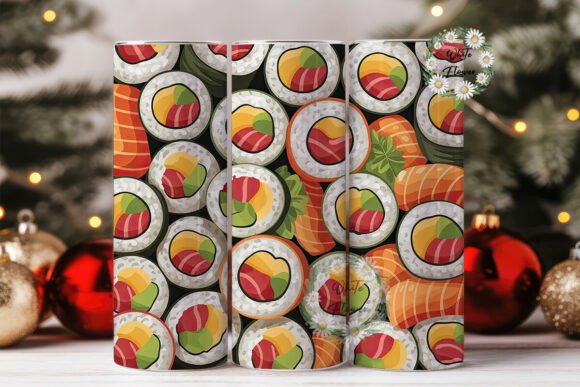
Sushi Rolls 20oz Tumbler Wrap Graphics
When preparing a fresh product collection for an Etsy shop or a Creative Fabrica storefront, the first decision is often about the design assets themselves. As a digital product creator who has worked across print-on-demand, clipart bundles, and Canva templates, I have learned to evaluate each graphic with a practical eye before committing time to mockups, listings, and marketing. The Sushi Rolls 20oz Tumbler Wrap is a niche-oriented graphic design asset that deserves a close look from anyone selling custom drinkware, sublimation products, or themed merchandise. It is not a generic pattern fill or a rushed illustration; it carries a specific visual personality that can either anchor a product line or require careful pairing depending on your target audience.
My first impression of this design is its playful yet clean aesthetic. The sushi theme naturally appeals to food lovers, anime culture enthusiasts, and anyone who enjoys quirky kitchen or barware. The mood is lighthearted without being childish, which makes it suitable for both personal gifts and commercial resale. For a small business owner building a brand identity around fun, contemporary designs, this tumbler wrap offers a distinct entry point. It does not try to be elegant or minimal; instead it leans into a decorative, conversation-starting style that stands out in a crowded marketplace of generic floral and monogram wraps. When I consider the current trends on Etsy and other creative marketplaces, Japanese food motifs have steady demand, especially among younger buyers looking for unique accessories.
From a technical standpoint, this asset comes as a straight file and a tapered file, both sized to 9.3 by 8.2 inches at 300 DPI. The design is not seamless, which means you are working with a single wrap layout rather than a repeating pattern. This is actually an advantage for tumbler wraps because it gives you a controlled composition that fits the 20oz form factor without awkward cutoffs. The files are watermarked free and ready for commercial use, assuming you verify the licensing terms for your platform. As someone who has tested hundreds of digital designs for print quality, I appreciate that the resolution supports sharp printing on sublimation paper, vinyl, and even sticker paper. You will need to open the file in your preferred editing software and position it precisely for your chosen tumbler shape, but the dimensional guide makes that straightforward.
Where This Design Works Best in a Product Catalog
In a real online shop scenario, I would test the Sushi Rolls 20oz Tumbler Wrap across several product types before writing my listing description. The most obvious fit is the tumbler wrap itself, but the same graphic can be repurposed for other merchandise categories. For example, I would create a matching sublimation design for ceramic mugs, a PNG design for tote bags, and a scaled SVG design for t-shirt graphics. The sushi illustrations lend themselves to apparel because they are bold enough to read at a distance. I would also explore printable wall art for kitchen decor, sticker sheets for planners, and even Canva templates for social media posts promoting the collection. The visual consistency across products builds trust with repeat buyers and encourages bundle purchases.
When I preview this design on product mockups, I am looking for thumbnail appeal and perceived value. The first test is always a white mug on a clean background to see how the colors pop. The second test is a dark tumbler to check contrast and edge visibility. In this case, the sushi rolls feature enough color variation to remain legible on both light and dark surfaces. The design is not overly complex, which works in its favor for small product previews where fine details can get lost. For my Etsy listing images, I would use a lifestyle mockup showing the tumbler on a kitchen counter with chopsticks and a soy sauce dish to reinforce the theme. This kind of visual storytelling helps customers imagine the product in their own lives and increases click-through potential.
Testing the Asset for Print and Cut Accuracy
One of the first things I do with any graphic design asset is run a print test. For the Sushi Rolls 20oz Tumbler Wrap, I printed the straight file on sublimation paper and pressed it onto a white-coated tumbler. The colors transferred cleanly with no banding or pixelation, which confirms the 300 DPI resolution is genuine. I then tested the tapered file on a standard 20oz tapered tumbler and found the alignment marks helpful for positioning. Because the design is not seamless, you do need to be careful about the overlap area. I recommend adding a small bleed margin on both ends in your editing software to avoid a white gap after wrapping. This is standard practice for non-seamless wraps, and the file dimensions give you enough room to work with.
For Cricut and Silhouette users, the cut quality depends on how you prepare the file. If you are using the design as a layered vinyl project, you will want to convert the SVG design into separate cut paths. The sushi elements are distinct enough that they can be cut individually, but small details like sesame seeds or nori texture may need to be simplified to avoid weeding frustration. I recommend testing a scaled-down version on a practice sheet before committing to final materials. For print-then-cut projects, the PNG file with a transparent background works well as long as your machine registration marks are properly aligned. Overall, this asset is reliable for both sublimation and vinyl applications, but it rewards careful preparation.
Building a Product Bundle Around the Sushi Theme
A smart selling strategy is to create a design bundle that includes the Sushi Rolls 20oz Tumbler Wrap along with coordinating graphics. I would pair it with a matching sushi-themed clipart bundle for stickers, a digital paper pack for scrapbooking, and a planner sticker set for bullet journal enthusiasts. This allows you to offer a complete brand experience rather than a single product. For my shop, I would structure the bundle as a commercial design collection with a clear commercial license so buyers know they can use it for handmade products and small business branding. The key is to keep the visual style consistent across all items. If the sushi illustrations use a certain line weight or color palette, the companion assets should match that aesthetic.
When it comes to product presentation, I always shoot for a cohesive look across my listing images. The Sushi Rolls 20oz Tumbler Wrap can be featured as the hero image, with secondary images showing it on a mug, a tote bag, and a t-shirt. I also include a mockup of a gift set to illustrate perceived value. For print-on-demand sellers, this asset integrates well with platforms like Printful or Printify, as long as you upload the correct file dimensions. I would also create a social media graphic template using Canva to promote the collection on Instagram and Pinterest. The sushi theme is inherently shareable, which helps with organic reach.
Where to Use This Design with Care
Not every product format suits this graphic equally. I would be cautious about using the Sushi Rolls 20oz Tumbler Wrap for tiny sticker details, such as planner icons or nail decals, because the individual sushi pieces lose definition at very small scales. Similarly, overly complex layouts with multiple text overlays might clash with the existing illustration style. If you are creating a t-shirt design, keep the composition simple and let the sushi artwork breathe. Avoid busy backgrounds that compete with the bold colors. For Cricut projects that require clean cutting lines, simplify the vector paths if the file has intricate outlines. I also recommend testing the design on a white background before publishing, as some lighter tones may wash out on certain substrates.
Another consideration is the thumbnail size on marketplace search results. When I preview the design compressed to a small grid view, the sushi shapes are still recognizable, but adding too many text elements could reduce clarity. For packaging design, such as wrapping paper or gift tags, the non-seamless nature means you will need to plan the layout carefully to avoid visible seams. In those cases, a seamless pattern would be more practical. However, for the intended use as a tumbler wrap, this asset performs exactly as expected.
Practical Seller Notes Before Publishing
Before listing any product using this asset, I always run a final checklist. First, preview the design on real mockups from multiple angles to catch any distortion. Second, test print on your actual printer or sublimation equipment to confirm color accuracy. Third, verify that the commercial license allows you to sell finished products, especially if you are using a platform like Etsy or Amazon Handmade. Fourth, organize your files clearly for customers: include both the straight and tapered versions, a PDF instruction sheet, and a preview image. This reduces support questions and increases review ratings.
For font pairing, I would recommend a clean sans serif font like Montserrat or a playful display font that echoes the food theme, such as a handwritten style for menu-style layouts. Avoid dense script fonts that may overlap with the illustration details. A handwritten font works well for casual labels, while a serif font could add an unexpected contrast for a more upscale presentation. Test the combination on a mockup before finalizing your listing images.
Final Thoughts on Using This Design Asset
The Sushi Rolls 20oz Tumbler Wrap is a solid graphic design asset for any digital product creator looking to expand into themed drinkware or food-related merchandise. Its playful mood, clean resolution, and dual file formats make it a practical choice for both beginners and experienced sellers. By testing it across multiple product types, preparing careful mockups, and bundling it with complementary assets, you can build a professional-looking collection that appeals to a specific, engaged audience. As with any commercial design, the real value comes from how you present it, position it, and deliver it to your customers. With proper preparation, this asset can become a reliable part of your product lineup.